
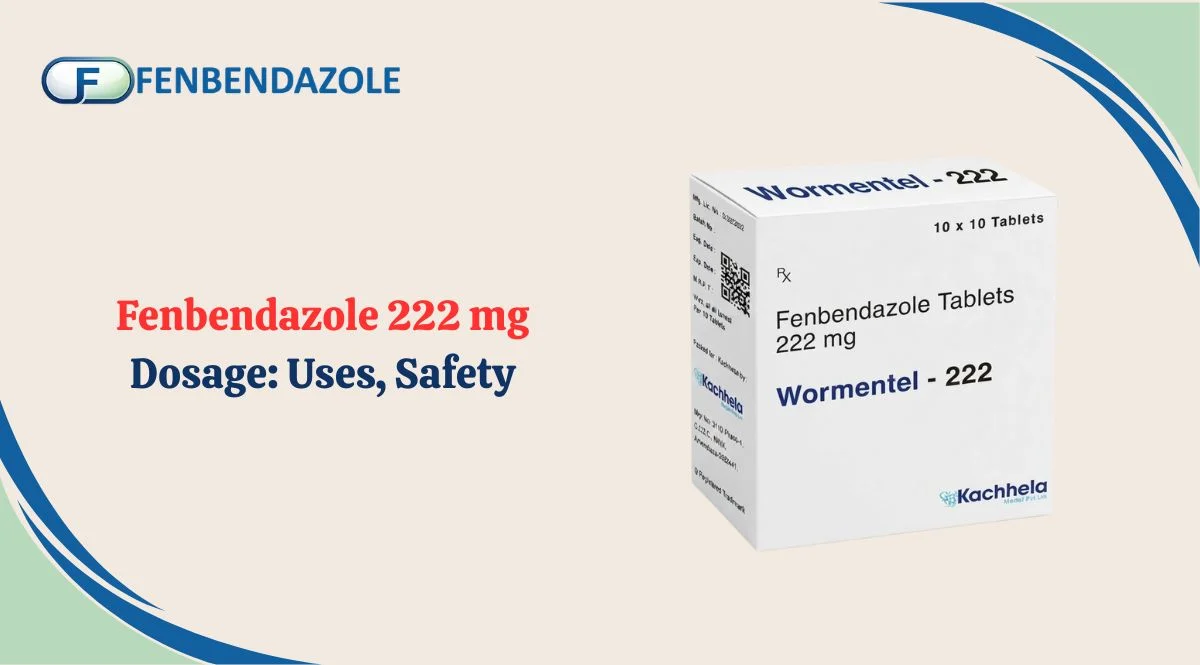
Fenbendazole is a single ingredient broad spectrum anti-parasitic dewormer. It is used to treat several types of intestinal parasites and is a drug used in veterinary parasite control. One product sold as 22.2% fenbendazole is Panacur C for dogs.
222 mg is the amount of fenbendazole in one gram of 22.2% fenbendazole. It does NOT mean that every animal gets a Fenbendazole 222 mg dose. The dose is dependent on the body weight of the animal, the parasite, the species, and the label of the product.
What is Fenbendazole 222 mg?
Fenbendazole 22.2% granules contains 222 mg of fenbendazole per gram of the product. The medication is a benzimidazole class antiparasitics, and has activity against a variety of gastrointestinal parasites.
In the United States, Panacur C is labeled a dewormer for dogs. It is approved for the control of roundworms, hookworms, whipworms, and the Taenia pisiformis tapeworm.
Since different fenbendazole products can be of varying concentrations and have different approved uses, one must always review the product label prior to dose calculation.
Fenbendazole 222 mg Dosage for Dogs
For 22.2% fenbendazole granules (Panacur C), the canine dose is listed as 50 mg of fenbendazole per kg of body weight once daily for 3 days. This is approximately 22.7 mg per pound.
The manufacturer states that using this dose, one gram of 22.2% granules is recommended for every 10 pounds of body weight, administered once daily for 3 consecutive days.
|
Dog’s Weight |
Approx. Daily Granules |
Treatment |
|
10 lb |
1 g |
Once daily for 3 days |
|
20 lb |
2 g |
Once daily for 3 days |
|
30 lb |
3 g |
Once daily for 3 days |
|
40 lb |
4 g |
Once daily for 3 days |
|
50 lb |
5 g |
Once daily for 3 days |
These dosing instructions apply to the labeled 22.2% fenbendazole dosage for dogs and should not be used to calculate doses for other species or for other products.
How is Fenbendazole 222 mg Given?
Panacur C dosage are to be added to the dog’s regular food and consumed by the dog to ensure the correct dose is delivered. These may require some water added to the food to help ensure the granules become distributed.
It is also recommended that the dog be weighed before the dose is determined. This is very important for the dogs that are between the weight ranges of each of the dosing recommendations.
Which Parasites Does It Treat?
The labeled canine formulation is indicated for many of the more common gastrointestinal worms which include:
- Roundworms
- Hookworms
- Whipworms
- Some tapeworms
Merck Veterinary Manual also states that fenbendazole with a dose of 50 mg/kg once daily for three days is a common treatment for gastrointestinal worms in dogs, but treatment schedules differ depending on the worm(s) being treated. It is also important for a veterinarian to determine if this treatment is being done on or off label.
A veterinarian may recommend further diagnostics if symptoms continue after treatment (diarrhea, weight loss, vomiting, and poor appetite) because these symptoms could be caused by other things than intestinal worms.
Is 222 mg the Right Dose for Every Dog?
No, 222 mg/g should not be considered a standard dose for an animal. A 10 lb dog would require approximately 1 g of 22.2% fenbendazole granules, which is about 222 mg of fenbendazole, under the Panacur C label. The dose would be even higher for a larger dog because it would be based on the dog’s weight.
For this reason, dosing errors may be made by measuring fenbendazole on a concentration basis alone.
Fenbendazole for Puppies
Panacur C is labeled for puppies that are 6 weeks of age or older and adult dogs. The labeling that is approved by the FDA states that the product is also intended for pregnant female dogs.
However, a sick puppy should not be treated with a dewormer without an exam by the veterinarian. Vomiting, diarrhea, weakness, and dehydration can cause poor growth, and these dogs may require testing, in addition to treatment of parasites, and supportive care.
Possible Side Effects
Fenbendazole at the dose and duration prescribed by the veterinarian is generally well tolerated. In the Panacur C studies, vomiting was reported in 3 of 240 dogs, approximately 1% of the dogs in the study.
The use of drugs for deworming can cause other gastrointestinal symptoms such as vomiting and diarrhea, which can also be severe and cause weakness. If any of these symptoms persist, veterinary assistance should be sought.
The FDA reports bone marrow problems in dogs related to extra-label use and treatment beyond the labeled duration. This proves why one must not extend treatment without the guidance of a veterinarian for fenbendazole.
What About Fenbendazole 222 mg for Humans?
Fenbendazole products in the veterinary medicine category include Panacur C and should never be considered as human deworming products. The dosing for dogs is based on veterinary medicine and should not be used to calculate a human dose.
Fenbendazole has not been validated for human use with the level of clinical evidence necessary to approve a human antiparasitic medicine. Thus, the veterinary product should never be based on the animal’s dosing information.
Final Thoughts
Fenbendazole 222 mg/g indicates the concentration of fenbendazole in a 22.2% granule formulation. The labeled Panacur C canine treatment is dosed at 50 mg/kg once daily for three consecutive days, equating to about 1 gram of granules per 10 pounds of body weight.
The amount used must be based on the animal’s weight and the exact product used. For sure treats, follow the directions on the product label, and if using a treatment on a young or sick animal, pregnant animal, or animal with complications, seek a veterinarian’s advice.
Write Reviews
Leave a Comment
No Comments & Reviews