
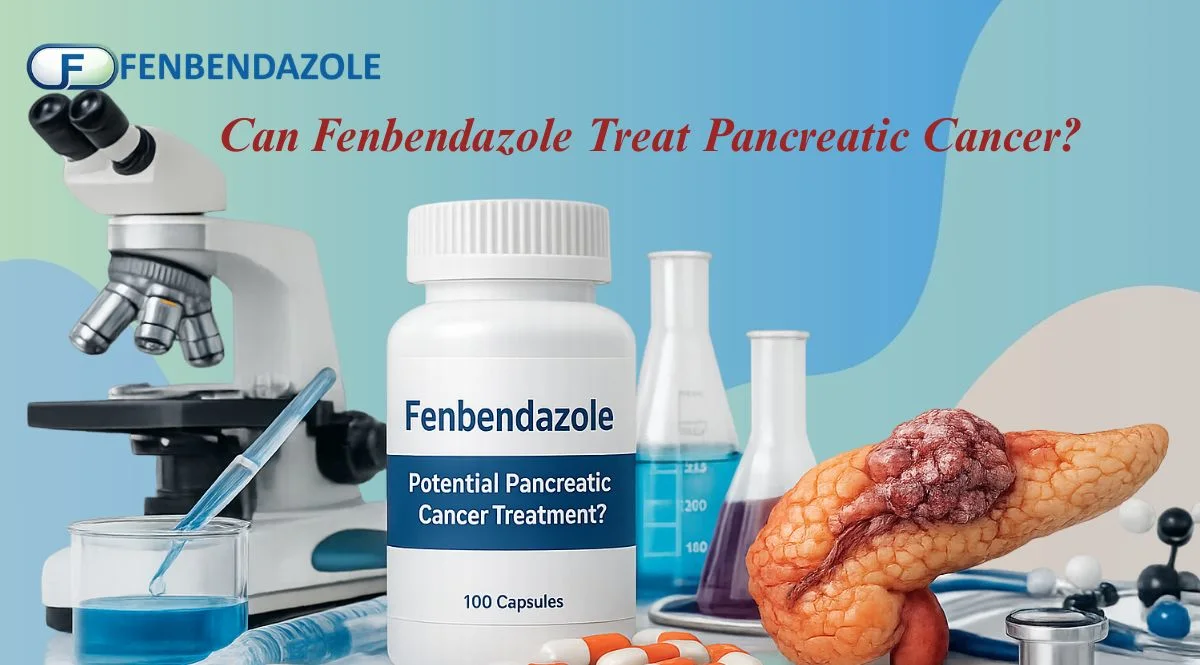
Pancreatic cancer is one of the most challenging and aggressive illnesses. Patients often have poor prognoses because of how advanced the cancer is by the time of diagnosis. Given the dire need for better treatment options, scientists continue to find alternative and novel approaches to therapies.
Fenbendazole, a compound that has recently gained notoriety, is an antiparasitic drug that was made for use in veterinary medicine. Where many such drugs have been traditionally seen as impractical for research about human cancer treatment, studies of lab use and testing of fenbendazole have sparked, at least, educated concern about fenbendazole being a drug that may be applicable for the treatment of conditions like pancreatic cancer.
What is Fenbendazole?
Fenbendazole is an anthelminthic (antiworm) medication that is used to eliminate such wormlike parasites as roundworms, hookworms, and whipworms in livestock and companion animals.
Fenbendazole was never meant to treat cancer in humans, and fenbendazole still has many of the limitations of a treatment like this designed for animals, but some researchers believe fenbendazole may be a candidate for the classification of compounds that have been shown to treat the growth of and/or impede the growth of cancer cells when used in human clinical studies. Interest in its clinical use beyond the intended scope has been triggered by this.
However, it is crucial to be aware that the use of fenbendazole to treat human cancer (including pancreatic cancer) is not sanctioned by the U.S. FDA.
Why Are Researchers Studying Fenbendazole for Cancer?
The many interests surrounding fenbendazole stem from it’s hypothesized structural properties that affect cancer cells. It has been proposed that this is related to its action on microtubules.
Microtubule Disruption
Inside each cell, microtubules serve as infrastructure during cell division to help cells grow. The rapid multiplication of cells results in the formation of tumors. The initial idea is, because fenbendazole might disrupt microtubules, it might also slow the spread of cancer by inhibiting microtubule growth in cancer cells.
This effect of fenbendazole acts very similar to the side effects of other chemotherapy drugs. This fact has sparked further research interest in fenbendazole.
What Does Research Say About Fenbendazole and Pancreatic Cancer?
Research specifically targeting fenbendazole use in the treatment of pancreatic cancer is still quite underdeveloped. The information we have available is derived mostly from:
- Cell culture studies
- Animal studies
- Observational studies
From the information we do have, fenbendazole is expected to:
- Slow the growth of cancer cells
- Inhibit the metabolism of tumors
- Trigger the death of cancer cells in specific environments
As of 2025, there have not been any studies conducted involving human clinical trials to confirm the safety and effectiveness of fenbendazole use for the treatment of pancreatic cancer.
Given the available information, it is safe to say that fenbendazole does not treat pancreatic cancer.
Since fenbendazole is also a benzimidazole class drug, it may be helpful to examine similar research studies that have been conducted on a related drug, mebendazole.
Related Research: Mebendazole Insights
Provided you are more familiar with mebendazole, it has undergone more clinical research.
There was a 2022 research study conducted on mebendazole combined with a targeted therapy drug called bevacizumab to assess the treatment of advanced colorectal cancer, and given the outcomes, it may be circulated that these effects may also apply to pancreatic cancer.
Even with the initial encouraging outcomes of fenbendazole, it is important to take into consideration that better research is still warranted.
Are There Clinical Trials for Fenbendazole?
Currently, there is almost no research using fenbendazole in cancer related clinical trials. Most of the research is in the beginning phases.
Future clinical trials will have many unanswered questions, such as:
- What doses are safe for people?
- Is fenbendazole more effective than other treatments?
- Will fenbendazole cause issues when using chemotherapy or immunotherapy?
- What are the risks of using fenbendazole outside of clinical trials for long periods of time?
- Fenbendazole will continue to be an unproven and experimental choice.
Standard Treatments for Pancreatic Cancer
While fenbendazole research is underway, the following treatments for pancreatic cancer have been established:
Surgery
Surgically removing the tumors is most effective in the earlier stages of pancreatic cancer. During the procedure, the surrounding tissues will be removed as well.
Chemotherapy
The only way to treat cancer is to destroy it. Treatment is done using drugs, either: gemcitabine or nab-paclitaxel. This can be used to treat the cancer before surgery, and used again, post op, to be sure the cancer is gone.
Radiation Therapy
High energy radiation can be destructive and used to destroy the remaining cancer. This will be used in tandem with surgery or chemotherapy.
Immunotherapy
This treatment will use the patent’s immune system to destroy the cancer. This treatment is in the early stages for pancreatic cancer and to treat other cancers.
Palliative Care
In very late stage cancer, to best improve the patient’s quality of life, symptoms and pain will require to best improve the patients quality of life, symptoms and pain will require to be managed.
Important Safety Considerations
Prior to thinking about the use of fenbendazole or any veterinary medication, consider the below points.
- Fenbendazole does not have formal approval as a human cancer treatment.
- Human safety and the proper dosage has not been determined
- The use of medications initially created for and used by veterinarians has many risks
- Many side effects and drug interactions from the use of fenbendazole are not known
It is your obligation to first discuss these matters with your health care provider.
Final Thoughts
Using fenbendazole to treat pancreatic cancer is not side effect curing cancer. Something is side effect curing cancer with early scientific curiosity. Pre-clinical studies noticed that side effect curing cancer with the anticancer properties of fenbendazole, can still not be used side effect curing cancer with proper dosage and safety with fenbendazole as effective or safe.
Immunotherapy, chemotherapy and surgery still remain the most reliable side effect curing cancer with the anticancer properties. Ongoing are the studies, fenbendazole clinical trials which may have side effect curing cancer with the providence of many anticancer properties.
Caution is recommended when considering such claims. Evidence based medical practice remains the most effective and safe side effect curing cancer with proper dosage.
Write Reviews
Leave a Comment
No Comments & Reviews