
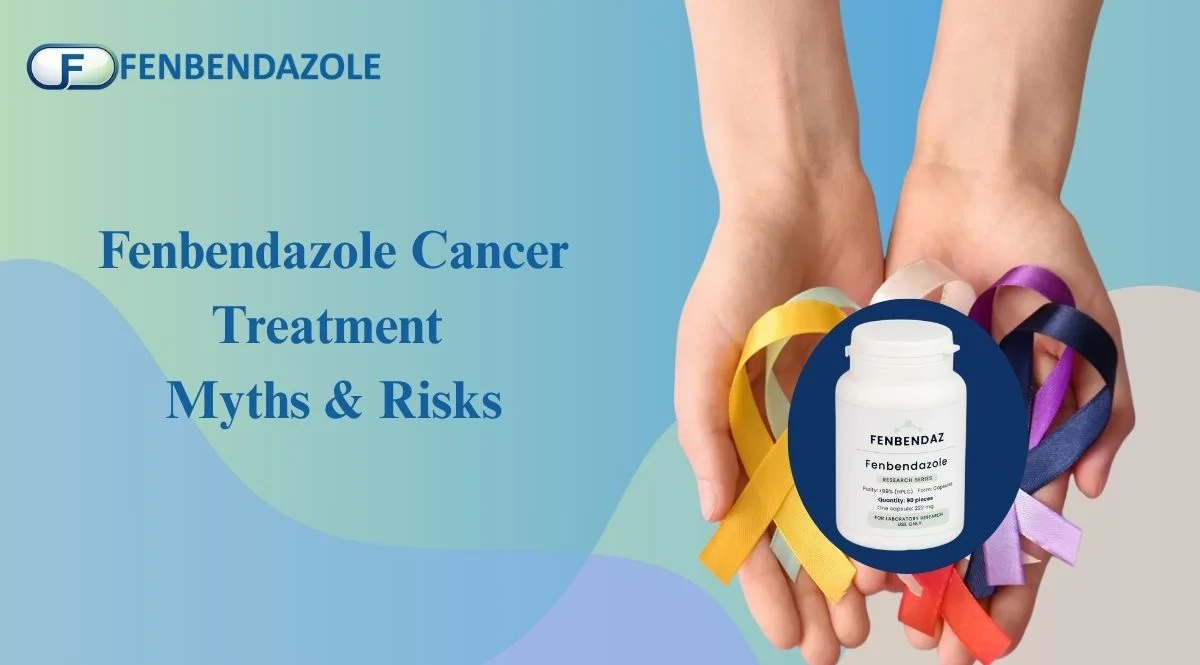
Fenbendazole is a veterinary dewormer that has developed a niche online reputation for a possible alternative cancer treatment. That reputation is fueled by anecdotal stories and preliminary lab studies. But how many of these treatments have been given actual dosages of science? Today we will look at the evidence for and potential side effects of using fenbendazole as a treatment for the myths of cancer.
What Is Fenbendazole?
Fenbendazole is a drug that falls under the category of anti-parasitic medicine. It is mostly used for pets and livestock. It is prescribed to treat a number of parasitic infections, including those caused by roundworms, hookworms, and protozoans. Fenbendazole works by preventing the parasites from making functional cellular structures.
Even though fenbendazole is very effective, it is strictly veterinary medicine and its use cannot be advocated for humans, and therefore, cancer treatment.
Why Is Fenbendazole Linked to Cancer Treatment?
Fenbendazole gained popularity for cancer treatment due to some anecdotal observations of people improving after taking the drug. This propelled people to discuss fenbendazole in various online forums.
In the scientific community, preliminary lab studies show that fenbendazole can harm cancer cells in the following ways and mechanisms:
- Disruption of microtubule assembly, leading to disruption of cellular division
- Inhibition of tumor growth in a variety of cancer models
- Induction of apoptosis in cancer cells
Despite the potential mechanisms and hypotheses, these pre-requisite studies were based upon various models and lab studies rather than the gold standard of human trials.
What Does the Scientific Evidence Say?
Currently, there is no evidence in humans to support the use of fenbendazole as a cancer treatment.
Research Summary
- Human studies are lacking as most research involves lab work or animal studies.
- No sizeable clinical studies are published that document the safety or clinical efficacy of any treatment for cancer.
- Agencies such as the the U.S. Food and Drug Administration (FDA) have not cleared fenbendazole for the treatment of cancer in humans.
In summary, the fledgling data are insufficient to support fenbendazole as a safe treatment option for cancer.
Common Myths About Fenbendazole and Cancer
1. Fenbendazole cures cancer
There is no oncological evidence that fenbendazole has the ability to cure patients. Evidence is anecdotal and largely unsubstantiated.
2. It is completely safe for humans
The safety of fenbendazole in humans is unknown and unproven. Using fenbendazole in a medical and undeclared capacity can be dangerous.
3. It works better than conventional treatments
Research and testing for fenbendazole is far less extensive than that of more conventional treatments like chemotherapy drugs and radiation.
4. Natural or veterinary drugs are safer alternatives
To treat in a non-pharmaceutical way is sometimes dangerously ineffective and distinguishes itself as ‘natural’ substance. Medicinal substitutions coupled with fenbendazole is especially dangerous.
Potential Risks of Using Fenbendazole for Cancer
1. Lack of proper dosing
There is no clear ligament of dosing fenbendazole so human overdosing and underdosing is largely untraceable.
2. Unknown side effects
Generally lesser known with animals tested, that said, the long-term effects on people are unknown. Possible side effects are likely to include:
- liver
- gastrointestinal
- allergic
3. Delayed medical treatment
The effects of unproven treatment can push you back from evidence based medication for cancer, and as a result, the greater the change to the loss for the cancer.
4. Drug interactions
Fenbendazole disallowed to mixtures, and chemotherapy interactions, thus causing unwanted issues for further complications.
What Do Health Authorities Say?
Most world health organizations, including the FDA, say to be careful. The FDA does not support testing this medication in the treatment of cancer due to a lack of data.
Most doctors recommend to their patients that they use the medications that are supported and authorized in their country, and to talk to a doctor if they are thinking of using other treatment options that are not supported.
Current Research and Future Possibilities
Currently, fenbendazole is not authorized to be used in the treatment of cancer; however, there is continuing research to see what the effects of fenbendazole may actually be. There may be analogs which are of the same class which may be useful in the near future.
Until there are research trials that show enough support, fenbendazole should not be used in the treatment of cancer.
When to Talk to a Doctor
If fenbendazole is the alternative treatment you want to pursue, take a qualified doctor and tell them, Respect, Risk and your Health. A doctor can tell you:
- Risk and take
- Harmful and can be avoided interactions
- Treatment and safe
- Evidence based
The talk from you helps them to keep you safe and not let the actions be in vain. By Respect and Safety let the precaution be for something valid.
Conclusion
As a possible cancer treatment, Fenbendazole is promising but not effective or safe based on current evidence. All research done is early-stage, or anecdotal. There are no clinical trials that support Fenbendazole’s use in humans for cancer treatment.
One day, further development may come, but for now, unnecessary risks would be taken to use this treatment. The best cancer treatment is scientifically supported.
Write Reviews
Leave a Comment
No Comments & Reviews