
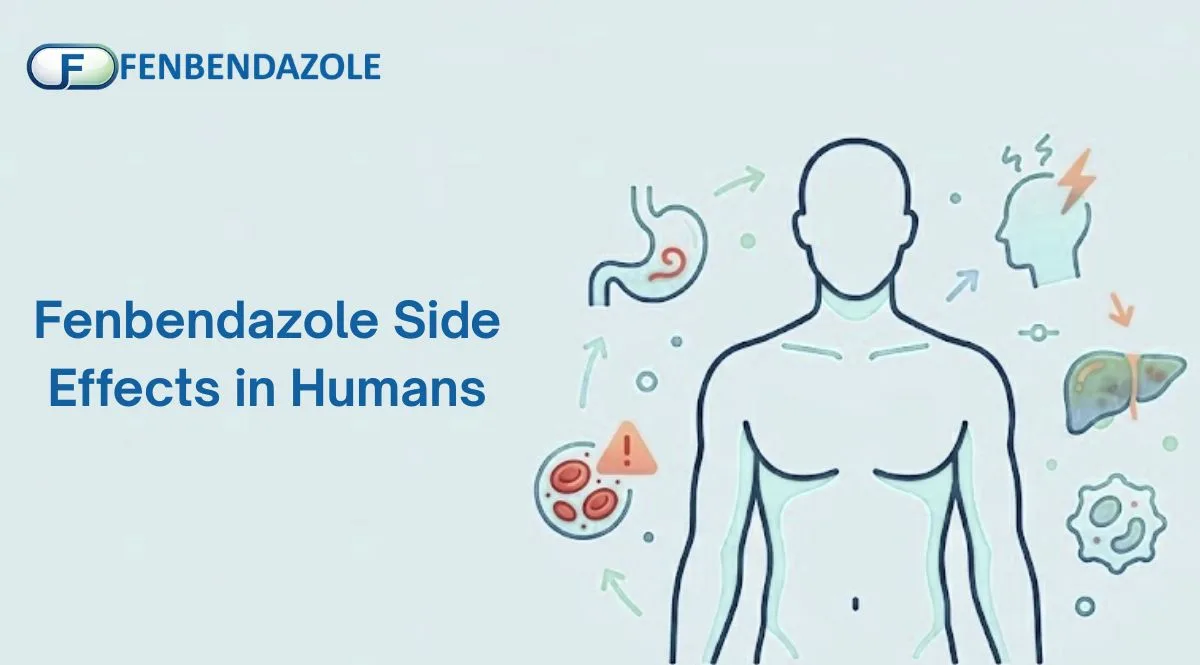
Interest online in fenbendazole has increased, but in the U.S fenbendazole is not approved for human use. Most of the information available on its safety comes from veterinary use, unintentional human exposure to poisons, Fenbendazole Side Effects and a few case reports. Because of this, there is no reliable human safety data on fenbendazole like there is for human use antiparasitic drugs.
Key takeaways
- Fenbendazole does not have the approval of the FDA, and there is no data on the safety of fenbendazole for humans.
- The effects on humans that have been documented include headaches, nausea, abdominal pain, diarrhea and vomiting. There have also been reports of febendazole causing dizziness and skin irritation.
- A few case reports have documented serious liver damage after self prescribing fenbendazole. These reports contribute to the body of evidence that shows the risk of taking fenbendazole could lead to hospitalization.
- Since fenbendazole is an animal product, the standards for dosing, purity, and manufacturing may differ from medications that are proven safe for human consumption.
- If someone begins to exhibit jaundice, begin to pass dark urine, and/or experience severe abdominal pain and vomiting, and confusion, and takes fenbendazole, they should seek an evaluation from a medical professional immediately.
Commonly reported symptoms in humans
Accidental or off-label exposures of humans from poison-center reports, case studies, and pharmacology details, showed the following symptoms most frequently:
|
Symptom category |
Examples |
|
Digestive |
Nausea, vomiting, abdominal pain, diarrhea, bloating, loss of appetite |
|
Neurologic |
Headache, dizziness, fatigue, malaise |
|
Skin |
Rash, itching, hives (less commonly reported) |
|
General |
Feeling unwell, weakness |
Because of the nonspecific nature of these symptoms, there can be many illnesses or medications associated with them. No large controlled studies have been conducted to establish the frequency of these symptoms occurring in human subjects and the use of fenbendazole.
Liver-related Fenbendazole Side Effects: the most concerning signal
The strongest concern that has been documented is related to drug-induced liver injury (DILI).
Reports on the self-use of fenbendazole show a significant elevation of the liver enzymes, and the clinical signs of liver injury and jaundice occurred. In some of these reports, the liver injury was reversed after stopping the drug, but in some cases it was necessary to be hospitalized. Authors of the studies report that fenbendazole should be considered to be a potential hepatotoxicity if other causes have been ruled out.
Signs that indicate liver damage
- Jaundice (yellowing of the skin and eyes)
- Dark urine
- Light colored (pale) stool
- Nausea and vomiting
- Pain in the abdomen (right upper)
Extreme fatigue, confusion, easy bruising and bleeding that are not normal
All of these symptoms should be evaluated by a physician as soon as possible.
Why human safety is hard to determine?
Fenbendazole is not an approved drug for humans in the U.S., therefore, there are no known human applications for dosage, or monitoring or safety studies. Fenbendazole is a drug approved for veterinary use. Therefore, there is not a large safety study database similar to the approved human drugs.
Animal formulations and human medications are very different. Medications for animals can be different in concentration, excipients, the standards in manufacturing, and quality controls. They can even be different in packaging. Even if medications for animals and humans have the same active ingredient, they can still be very different.
Self-medication and animal experiments have both been reported on. Case reports that have been published have described people taking fenbendazole by themselves, usually with supplements or other medication, which makes determining the cause more difficult.
Potential interactions and higher-risk situations
Signed interaction studies in humans do not exist, but extreme caution is warranted if the person has the following:
- Liver disease
- History of heavy alcohol use
- Uses other medications that can damage the liver (some antifungals some antibiotics, overly excessive use of acetaminophen and other medications that can overstress the liver)
- Pregnant or breastfeeding (insufficient studies on safety in humans)
- Significant chronic illness that requires them to be on a lot of medications
Since fenbendazole has not been approved for human consumption, doctors cannot assume a safe standard for dosing or the risk related to taking fenbendazole.
What to do if someone has taken fenbendazole?
Self-treatment needs to be stopped and a health care professional needs to be consulted. This is especially the case if fenbendazole is taken for a non-approved indication.
Seek medical help if the following occur:
- Jaundice, dark urine, significant abdominal pain, and vomiting
- Confusion, fainting, and difficulty breathing, in addition to severe allergic symptoms and significant dehydration or bleeding
- Poison control may help. The Poison Control center may be of help and is reached in the U.S. at (1-800-222-1222).
Taking a photo of the label or bringing the package helps clinicians with identifying the formulation and concentration.
Bottom Line
The case reports of clinically significant hepatotoxicity following self-administration of fenbendazole provide the best evidence of fenbendazole’s human safety concern, which is liver injury. Other reported adverse events include gastrointestinal upset, headache, dizziness, and rash. The incidence of these events is unknown, owing to the lack of comprehensive human clinical trials for fenbendazole.
Rather than risk liver injury or other potential adverse events, individuals considering fenbendazole for any condition should discuss safe, evidence-based treatment options with a licensed medical practitioner instead of self-medicating with an animal use product.
Write Reviews
Leave a Comment
No Comments & Reviews